Polyacrylamide is one of the most widely used synthetic polymers and finds application in industries such as chemicals, petroleum, mining, agriculture, and water treatment. Due to its long-chain structure and active functional groups, this polymer exhibits excellent coagulation, non-stick, friction, and rheological properties. Molecular weight is one of its most important physicochemical properties and significantly influences its performance characteristics.
This article discusses in detail the concept of the molecular weight of polyacrylamide, its measurement methods, the influence of molecular weight on polymer properties, and its various industrial applications.
The concept of the molecular weight of a polymer
The molecular weight of a polymer is the average molecular weight of its chains. Since polymers typically consist of chains of varying lengths, their molecular weight is not a single value but is expressed as an average . The most important types of average molecular weight include:
-
Average molecular mass number (Mn) : the sum of the molecular masses of each chain divided by the number of chains.
-
Molecular weight (Mw) : the sum of the ratios between the molecular weight of each chain and its mass.
-
Molecular weight viscosity (Mv) : mean value determined by rheumatic measurements and viscometry.
The differences between these values, especially the Mw/Mn ratio (also called molecular weight distribution index (PDI)) , provide information about the homogeneity or dispersion of the polymer chains.
Molecular weight of polyacrylamide
Polyacrylamide can be used to produce polymers with a wide range of molecular weights, from polymers with relatively low molecular weights (hundreds of thousands of Daltons) to very heavy polymers with molecular weights of over 20 million Daltons.
Polyacrylamide is usually divided into three grades according to weight:
-
Low molecular weight polyacrylamide (low molecular weight, ~0.1–1 million Daltons):
This type of polyacrylamide is mainly used in processes that require rapid penetration and higher reactivity, for example to improve chemical processes or as an additive for certain compounds. -
Medium molecular weight polyacrylamide (medium molecular weight, ~1-5 million Daltons):
Suitable for more general applications such as water purification and improving coagulation performance. -
High molecular weight polyacrylamide (HMW, ~5-25 million Daltons):
This material group has the widest range of industrial applications, especially in the oil and gas industry to increase oil recovery rate (EOR), control sludge losses and reduce friction.

Methods for determining the molecular weight of polyacrylamide
There are many methods for determining the molecular weight of polyacrylamide, with the chosen method depending on the molecular weight range and the required accuracy.
-
Viscosity measurement:
This is the simplest and most common method, based on the ratio between the viscosity of a solution and its molecular weight. -
Gel permeation chromatography (GPC):
By separating molecules based on their hydrodynamic size, Mn, Mw and PDI can be determined. -
Static light scattering:
used for the direct determination of the absolute molecular weight; particularly suitable for very high molecular weight ranges. -
Rheomedical methods:
Molecular weight and chain length can be estimated using flow and viscoelasticity curves.
The importance of the molecular weight of polyacrylamide for its performance properties
The molecular weight of polyacrylamide directly influences its physical and functional properties:
-
Agglomeration capacity:
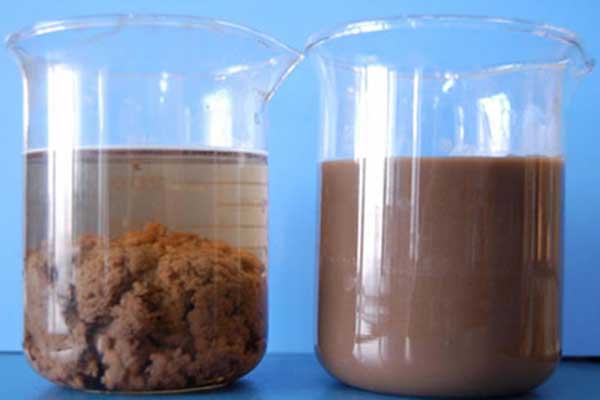
High-molecular-weight polymers have longer chains and can bind more suspended particles. Therefore, heavier polymers are more effective in water and wastewater treatment. -
Solution viscosity:
An increase in molecular weight leads to a significant increase in solution viscosity, even at low concentrations. This property is crucial for improved petroleum recovery in the petroleum industry. -
Settling velocity:
Lighter polymers tend to form smaller clumps and sediment more slowly, while heavier polymers form larger clumps. -
Thermal and mechanical stability:
High molecular weight polyacrylamide can suffer chain breaks at certain temperatures or shear forces. Therefore, choosing a molecular weight suitable for the operating conditions is crucial.
Industrial applications based on molecular weight
-
Water and wastewater treatment: High molecular weight
branched polyacrylamide for the agglomeration of colloidal particles. -
Paper industry:
Intermediate polymers are used as fiber carriers and dewatering improvers. -
Oil and gas:
Extra heavy polyacrylamide for reducing friction in pipelines and improving oil production processes. -
Mining:
Medium and high molecular weight polymers play a key role in separating minerals from sludge. -
Agriculture:
Cultivation of lighter varieties to improve the soil’s water absorption capacity and reduce erosion.
In conclusion
The molecular weight of polyacrylamide is a key factor in its performance characteristics across various industries . Each molecular weight range exhibits specific application properties, from lightweight solutions with high penetration to heavy polymers with high coagulability. When selecting polyacrylamide for industrial processes, factors such as temperature, pH, salt concentration, mechanical shear stress, and specific operating conditions should be carefully considered.
A better understanding of the concept of molecular mass and its role in the behavior of polyacrylamide can improve process efficiency and reduce costs.